One integration for your entire messaging stack.
Send through SMS, WhatsApp, and RCS with routing, templates, compliance, fallback, and delivery visibility handled by Sent.

$15M from investors who backed Sent early, then tripled down








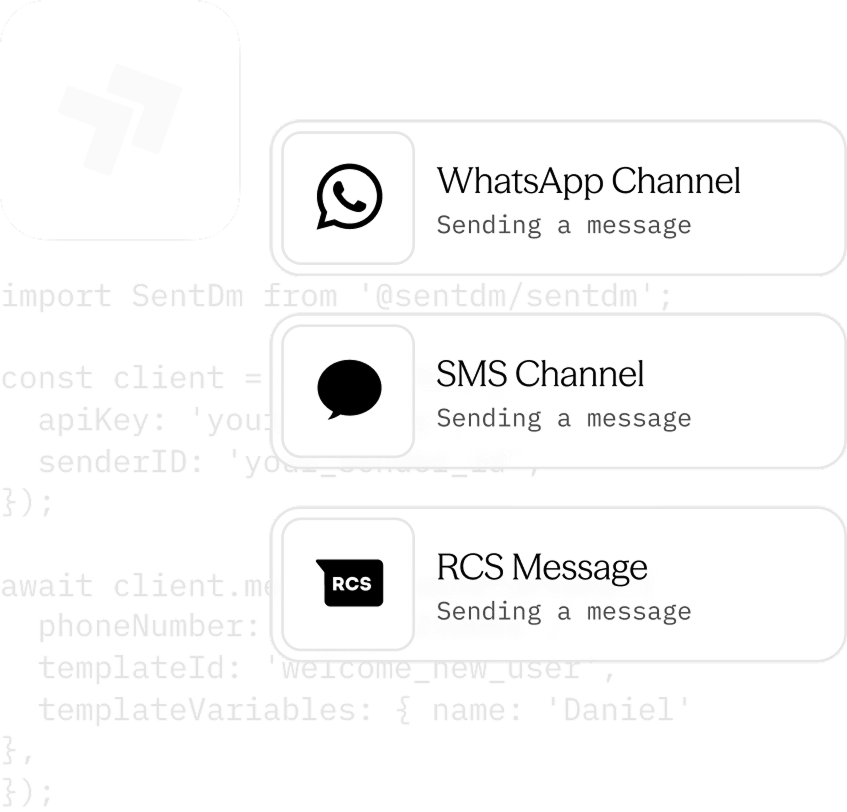
One API for every channel
Use one consistent request for SMS, WhatsApp, and RCS. Add or switch channels without rebuilding your product.
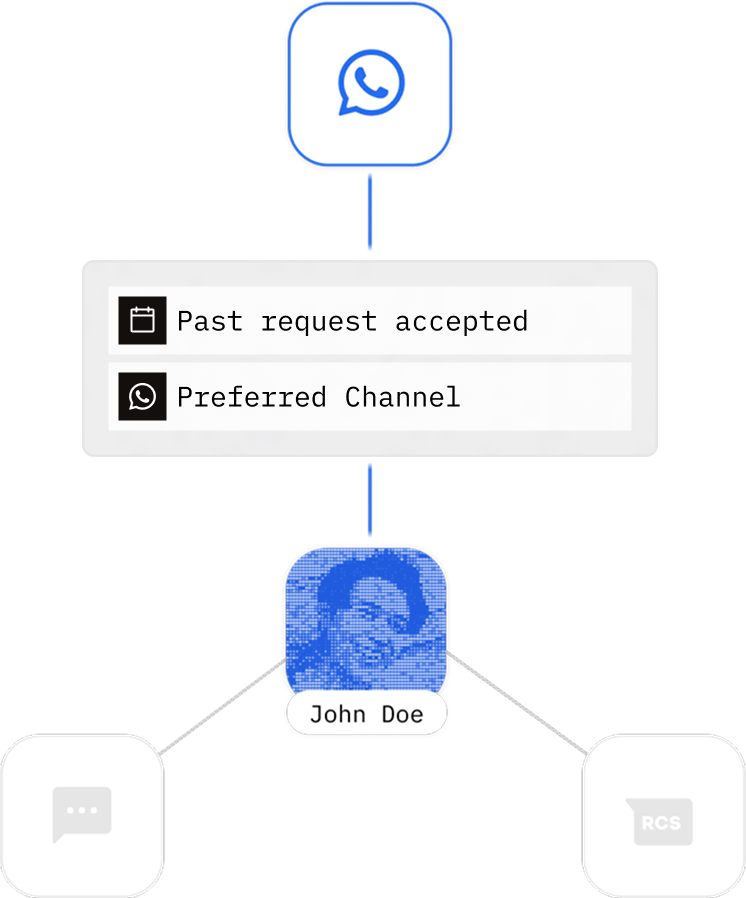
A delivery profile, not just a phone number.
Each contact carries channel availability, validation, communication preferences, consent and delivery history giving Sent useful context before a message moves.
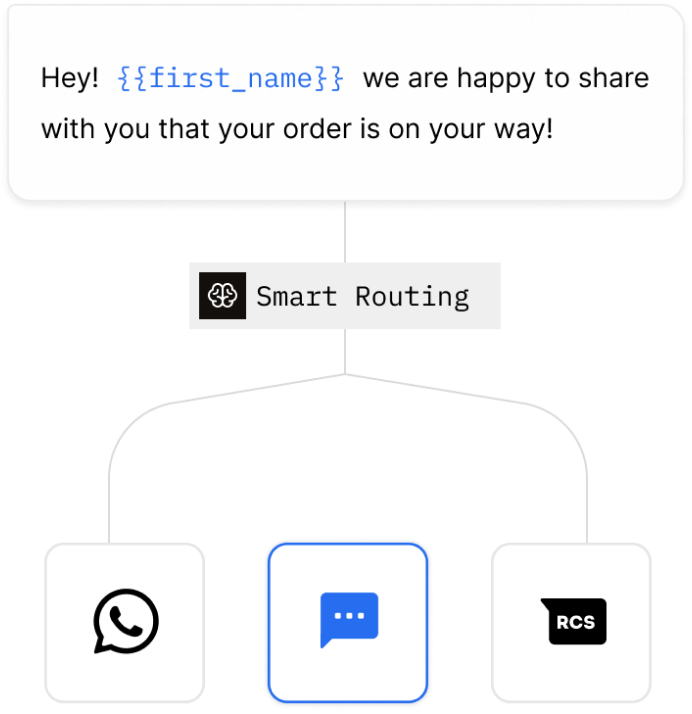
Content defined by intent, not channel.
Create reusable templates with variables, media, buttons and channel-specific overrides. Sent handles formatting, validation and approval requirements for SMS, WhatsApp and RCS.
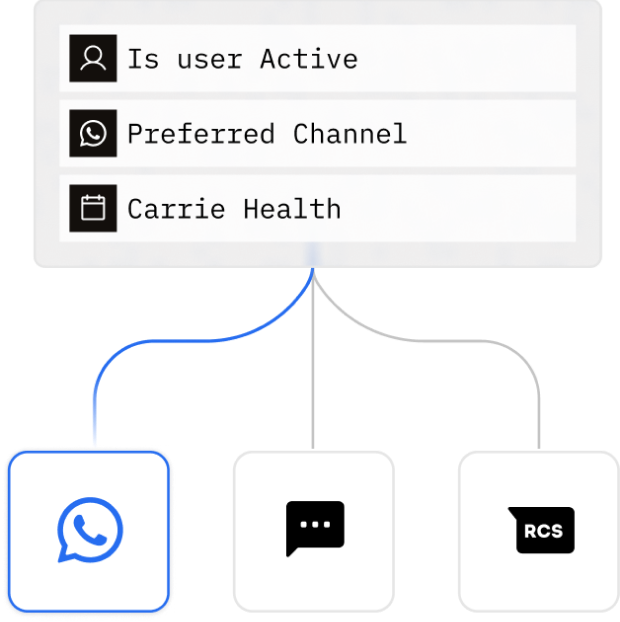
A decision engine for every send.
Sent evaluates channel availability, customer preferences, carrier health, cost and delivery performance to select the strongest path in real time.
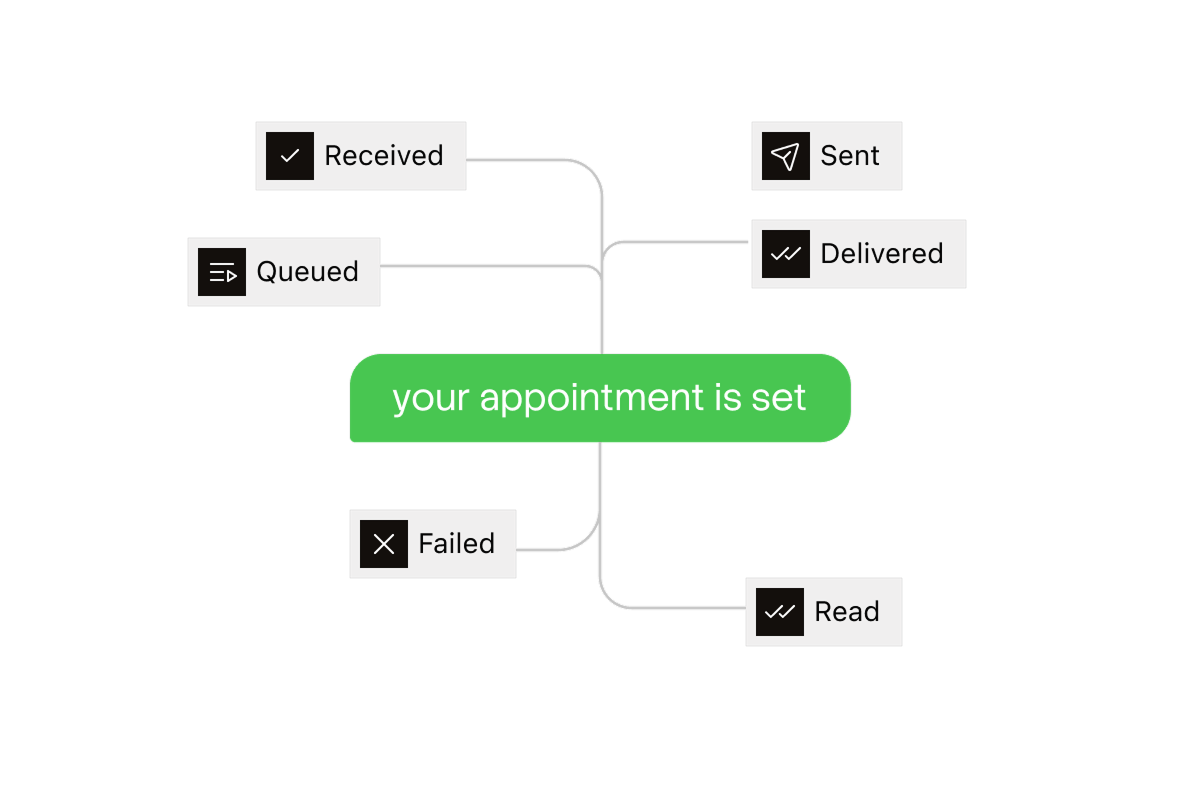
Follow every message from request to delivery.
Track received, queued, sent, delivered, failed, and read states through one consistent message record.
Built for production from the first message.
Sent brings compliance, scalable infrastructure, and developer tools into one platform, so your team can launch faster and operate with confidence.
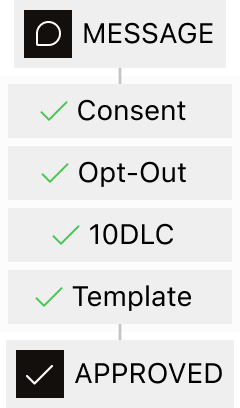
Compliance built in
Handle consent, opt-outs, 10DLC registration, WhatsApp templates, and country-specific messaging requirements at the platform level.
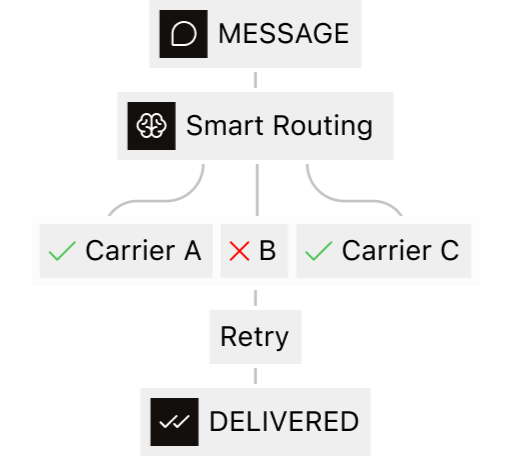
Infrastructure that keeps moving
Sent manages carrier routing, health checks, load balancing, retries, and global delivery behind one integration.
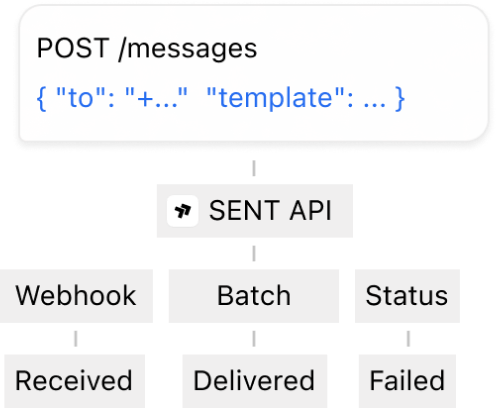
Tools developers expect
Build with REST APIs, SDKs, webhooks, reusable templates, sandbox testing, batch sends, and clear error handling.
SOC 2 Type II · GDPR · FCC Registered · NECA OCN 126L · IPES
Three channels. One consistent way to send.
Use SMS, WhatsApp, and RCS through the same API, templates, routing system, and delivery data.
SMS
Reach almost any phone with fast, reliable messages for authentication, alerts, reminders, notifications, and campaigns.
Read MoreWhatsApp
Create rich, two-way customer experiences with templates, media, conversations, and official WhatsApp Business delivery.
Read MoreRCS
Send branded messages with images, buttons, cards, and carousels, with automatic SMS fallback when RCS is unavailable.
Read More
Frequently asked questions
In Sent, every phone number you message becomes a contact with a delivery profile. Sent checks the number against SMS carriers, WhatsApp registration, and the device's RCS support, and records which channels can reach it. Sent creates the profile automatically on the first send, refreshes it over time, and uses past delivery results to improve future routing.
Sent decides at send time, separately for each recipient. It weighs routing rules (country, number prefix, carrier, number type), whether the recipient can be reached on WhatsApp or RCS, whether the template is approved on each channel, and consent. The best route is used first, and the remaining routes are kept ready as fallbacks.
If a route fails because of a provider outage or timeout, Sent moves to the next route. That can be the same channel through another provider, or another channel when Sent is choosing the channel. A message tries at most three different routes, and permanent failures such as an invalid number stop immediately. Consent is checked again before every retry.
A Sent template describes what a message says once: body, header, footer, buttons, and variables. Sent then adapts it to each channel. WhatsApp gets the full layout with buttons, RCS shows suggestion chips, and SMS receives the body text. Sent also submits templates for approval, to Meta for WhatsApp, and tracks their status for you.
Every Sent message reports each status change: queued, routed, sent, delivered, read (on WhatsApp and RCS), or failed. Messages that Sent stops for consent, balance, or approval reasons are reported with a reason code. Your product receives these as webhooks signed with HMAC-SHA256, and can also look up any message by its ID.
On every message, Sent blocks sends to opted-out contacts, applies STOP replies across SMS, WhatsApp, and RCS, and holds messages that would land in a country's quiet hours. It also adds a STOP button to every RCS message, supports US 10DLC registration, and manages WhatsApp template approval. Collecting customer consent remains the sender's responsibility.
Sent offers a REST API with official SDKs for TypeScript, Python, Go, Java, C#, PHP, and Ruby. It includes signed webhooks, a sandbox mode for testing without sending, and batch sends of up to 1,000 recipients per request. Idempotency keys make retries safe, and an MCP server lets AI coding agents like Claude Code and Cursor work with Sent directly.
One API. Every channel.
Contact Sales