Make SMS the fastest path to every customer.
Send verification codes, alerts, reminders and operational updates through the native messaging channel on every phone. Sent handles sender setup, carrier routing, compliance and delivery status behind one API.
- Urgent Alerts
- Maximum Reach
- No App Required
- Reliable Fallback
- WhatsApp Fallback
- OTP & 2FA
A familiar place for important customer conversations.
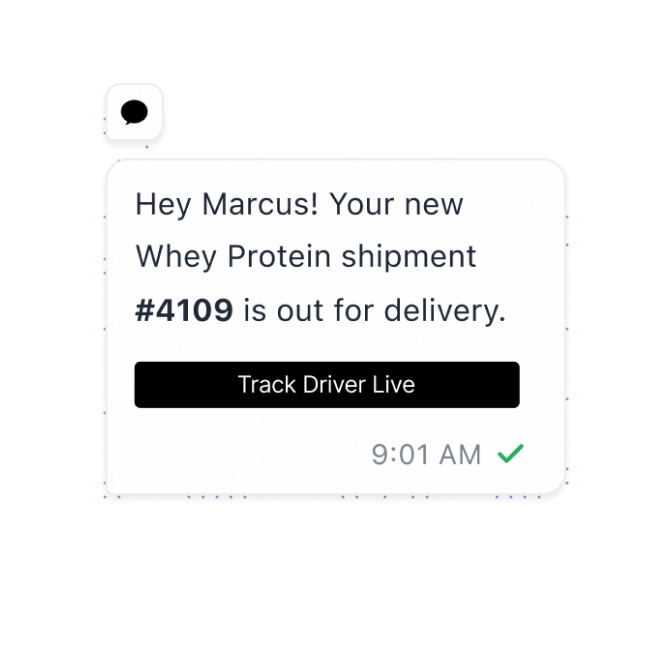
Nothing new to install
Reach customers through the messaging app already built into their phone. No account, download or new behavior required.
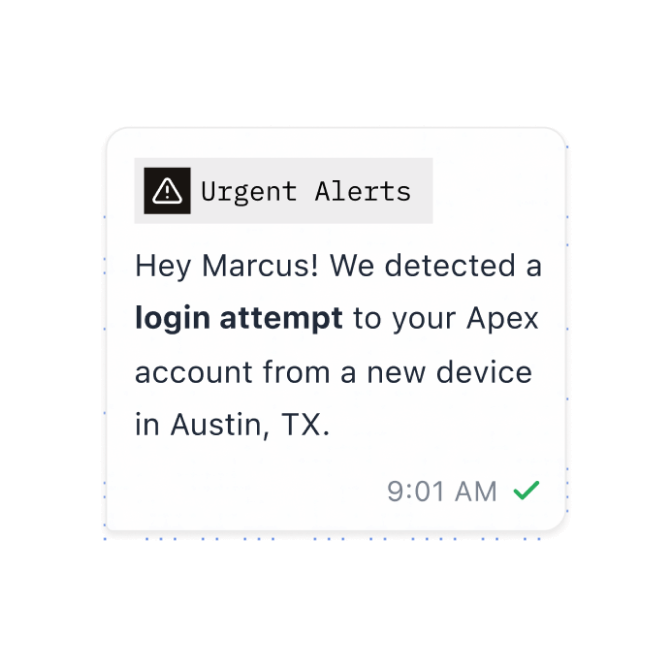
Built for urgent moments
Deliver codes, security alerts and operational updates when the value of the message depends on timing.
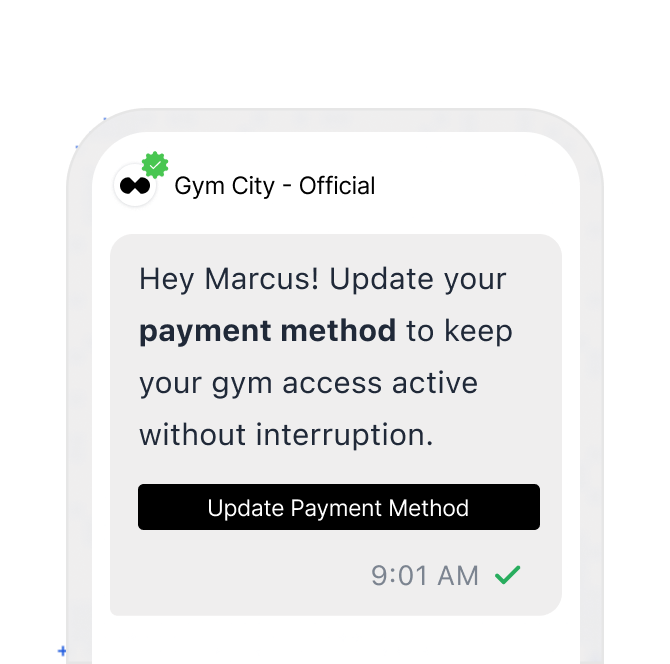
The next step stays clear
Keep the message concise and give customers one direct link or reply path when action is needed.
Turn product events into timely SMS.
Trigger the right message from the systems that already know what happened.
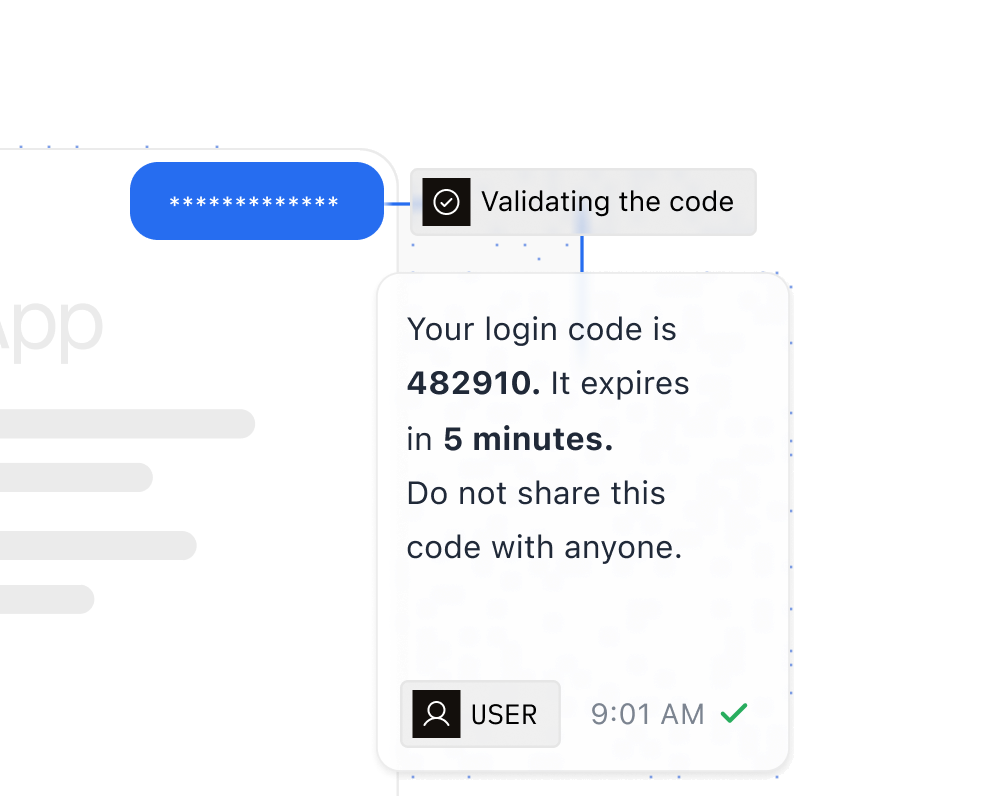
Get users through the door
Deliver one-time passwords, login verification and account-recovery codes with a clear expiration time.
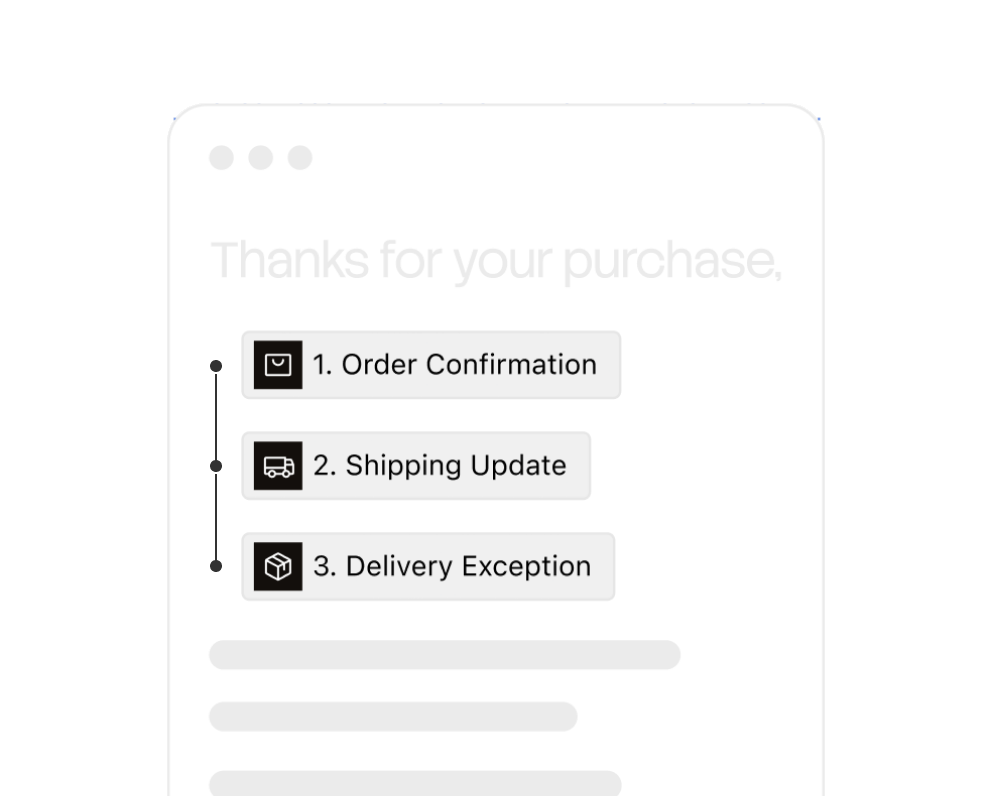
Keep every order moving
Send confirmations, shipping updates and delivery exceptions as the order changes.
Confirm appointments
Let customers confirm or reschedule with a single reply, and keep the booking in step automatically.
Protect customer accounts
Alert customers to new logins, password changes and unusual account activity.
Bring customers back
Send relevant renewal, restock and re-engagement reminders without turning the channel into noise.
Short messages, built to stay predictable.
Control how content, variables, encoding and replies behave before anything reaches the carrier.
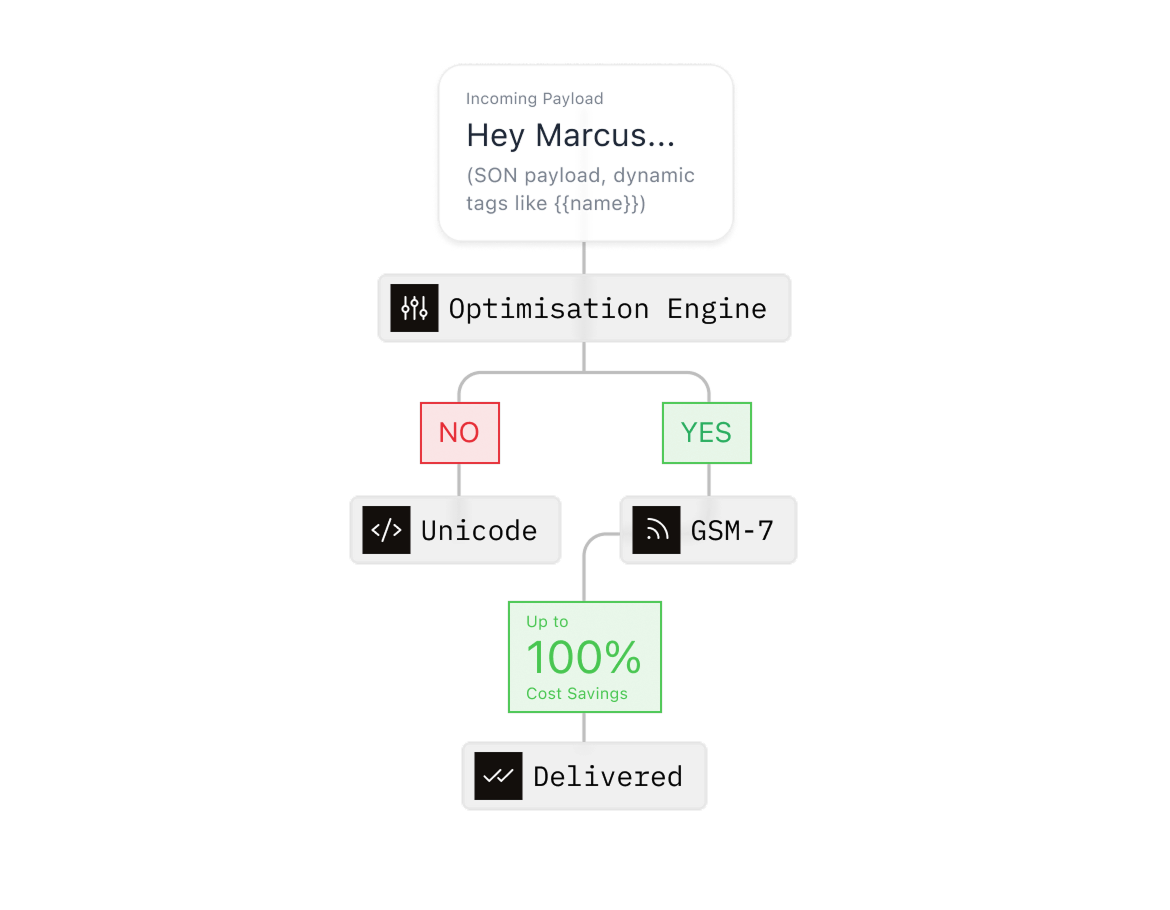
See how GSM-7, Unicode, variables and translations affect message length and billed segments.
From sender setup to approved traffic.
Configure sender identities, destination countries, registration and consent controls in one workflow.
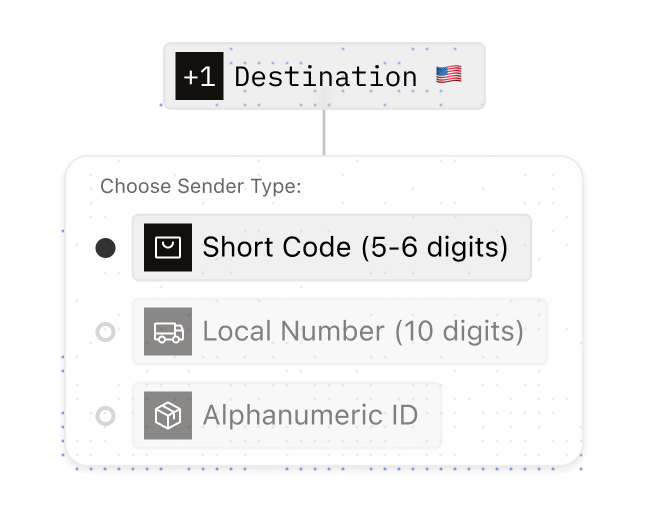
Choose your sender identity
Configure a dedicated number, short code or alphanumeric sender ID based on the destination and use case.
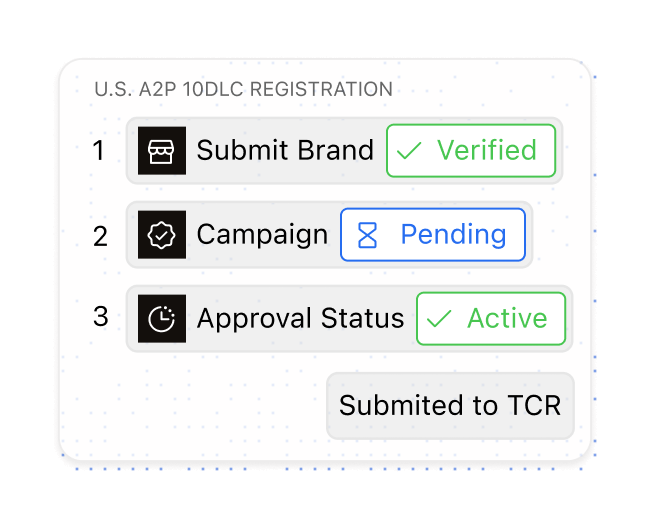
Register U.S. A2P messaging
Prepare and submit the brand and campaign information required for 10DLC, then follow its approval status.
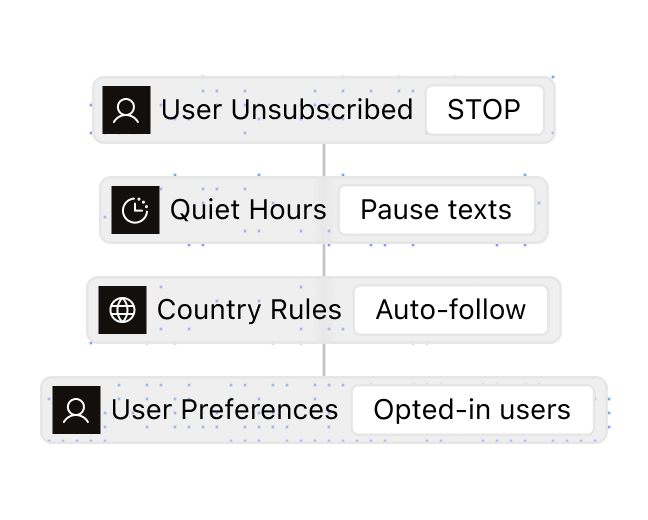
Apply consent controls
Enforce opt-outs, quiet hours, destination rules and customer communication preferences before sending.
- Sender identity
- Destination countries
- 10DLC registration
- Consent controls
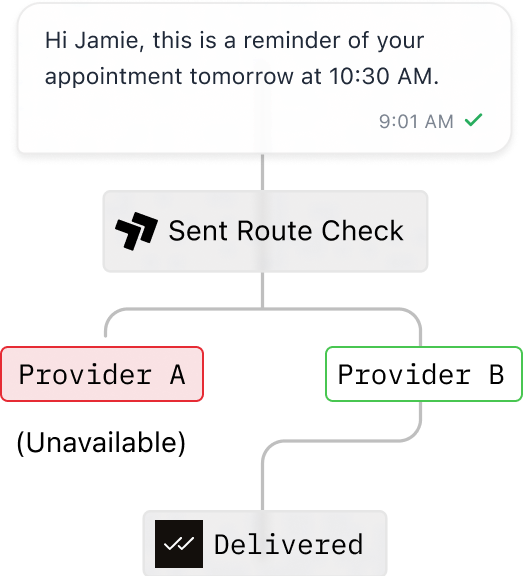
One request. The right carrier path.
Send SMS through one API call. Sent selects an available route, retries recoverable failures and moves between configured providers without changing your integration.
Explore the SMS API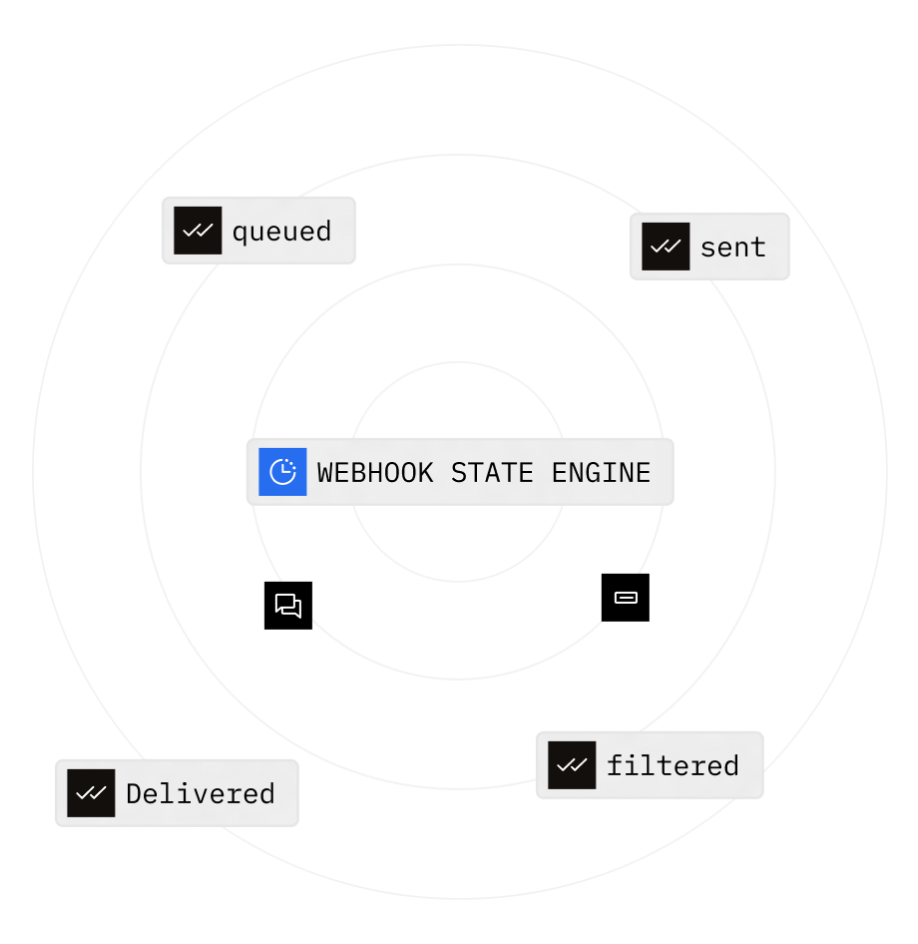
Delivery status your product can use.
Receive queued, sent, delivered, filtered, failed and inbound-message events through webhooks, so your product always knows what happened next.
Explore webhooksThree channels. One consistent way to send.
Use SMS, WhatsApp, and RCS through the same API, templates, routing system, and delivery data.
SMS
Reach almost any phone with fast, reliable messages for authentication, alerts, reminders, notifications, and campaigns.
WhatsApp
Create rich, two-way customer experiences with templates, media, conversations, and official WhatsApp Business delivery.
Read MoreRCS
Send branded messages with images, buttons, cards, and carousels, with automatic SMS fallback when RCS is unavailable.
Read More
Frequently asked questions
Sent supports three SMS sender types: dedicated phone numbers (including US 10DLC numbers), short codes, and alphanumeric sender IDs such as your brand name. Which ones are available depends on the destination country and your use case. Alphanumeric sender IDs can only send, so customers cannot reply to them.
Yes. 10DLC registration is required by US carriers for any business texting US numbers from software. You fill in one form in the Sent dashboard or through the API. Sent's compliance team reviews it to catch common rejection reasons, submits it to The Campaign Registry, tracks the review, and notifies you when you're approved.
A standard SMS fits 160 characters. If the message contains even one emoji, non-Latin character, or curly quote, the whole message switches to Unicode and the limit drops to 70. Longer messages are split into segments of 153 characters (67 for Unicode), and each segment is billed as one SMS. Sent's docs include a calculator to check length before you send.
Yes, when you send from a phone number or short code whose route supports inbound messages. Replies reach your product as message.received webhooks, and Sent sends your answer from the same number the customer wrote to. Messages from alphanumeric sender IDs can't receive replies. Contact Sent support to confirm that a specific market supports inbound messages.
Sent recognizes STOP, CANCEL, UNSUBSCRIBE, QUIT, and END for opt-out, START, UNSTOP, and SUBSCRIBE for opt-in, and HELP and INFO for help, as required by US carrier and TCPA rules. The whole reply must match the keyword, in any letter case. You can add custom keywords, for example in your customers' language, and every opt-out also applies to WhatsApp and RCS.
Sent's SMS routing isn't tied to a single provider or carrier. Routing rules match each recipient by country, number prefix, carrier, and number type. Sent monitors provider health and spreads traffic across providers. If a provider fails or times out, Sent retries the SMS through another provider, trying up to three different routes in total.
Yes. When your account has several SMS numbers, you can list the numbers a send may use. Sent then picks among them, preferring a number whose area code matches the recipient's, so a 212 number serves a 212 customer. Every listed number must be an active sender on your account, or the message is blocked and not charged.
One API. Every channel.
Contact Sales