Launch campaigns that feel relevant on every channel.
Turn audience intent, customer context, and one campaign idea into channel-native messages with consent controls and measurable delivery.
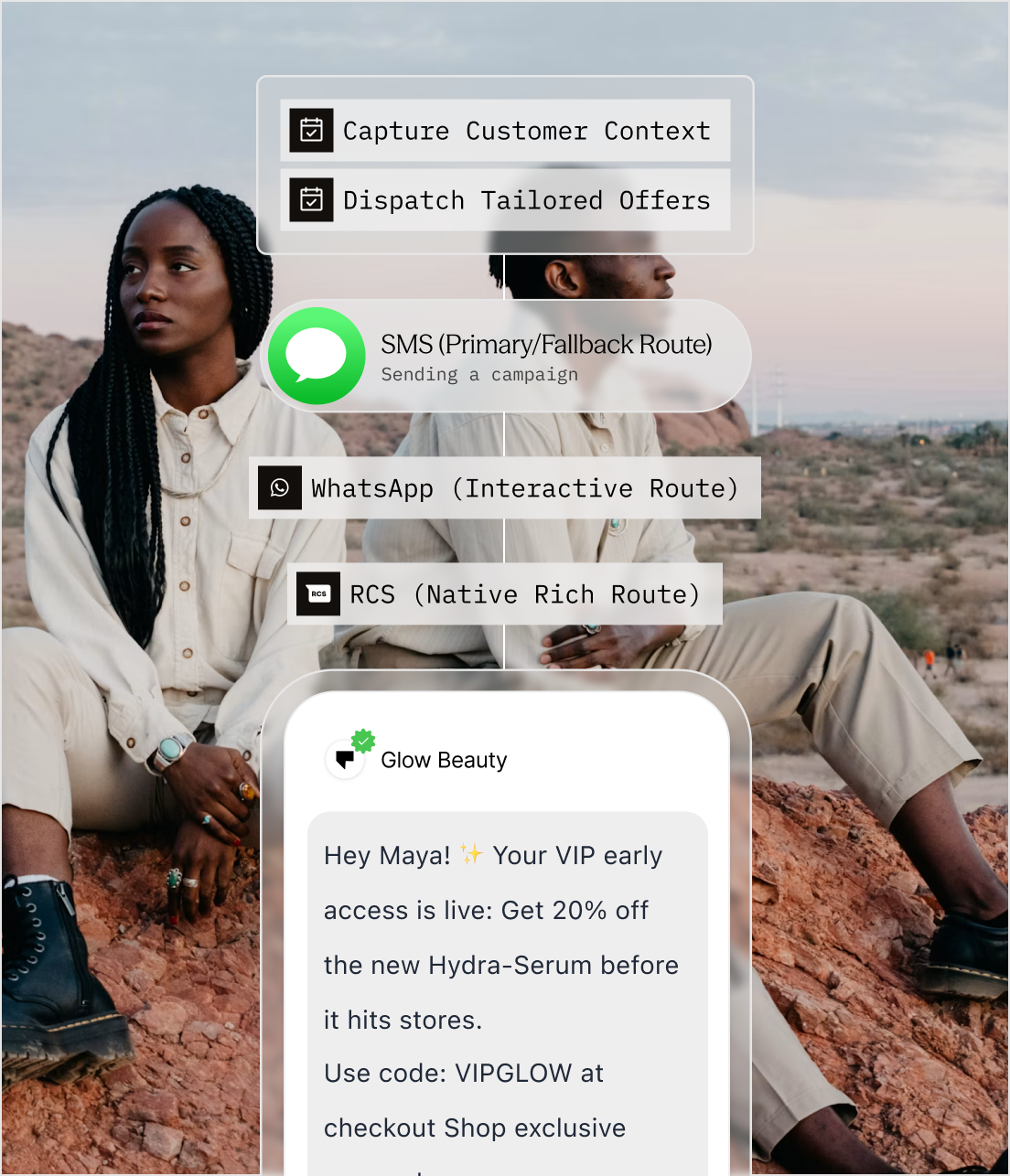
Campaign reach is easy to buy. Relevance is harder to earn.
When audience data, creative production, channel rules, and measurement live in separate tools, campaigns become slower to launch and easier to ignore.
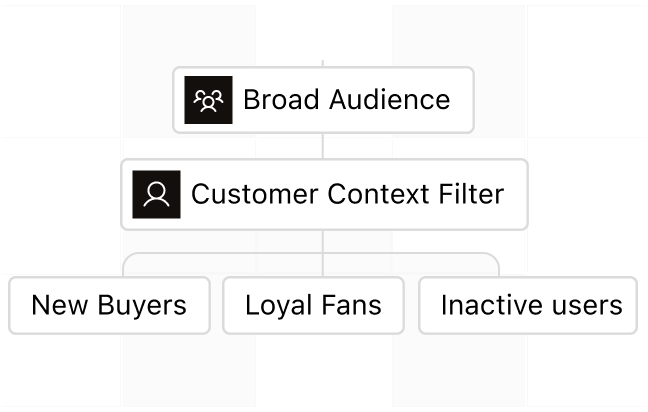
Broad audiences produce broad messages
A campaign built without customer context treats a new buyer, loyal customer, and inactive user as the same person.
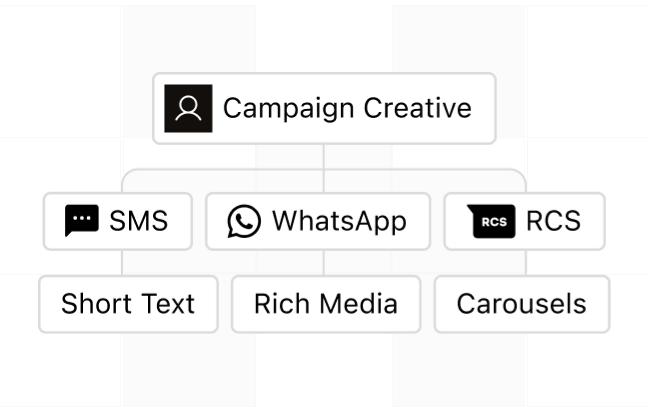
Every channel creates another production path
SMS, WhatsApp, and RCS have different structures, approvals, media, and interaction patterns that teams must coordinate.
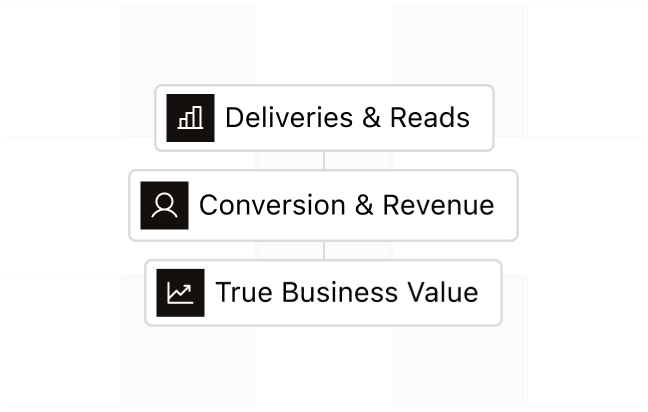
Send metrics hide business impact
Delivered and read states matter, but they do not explain whether the campaign changed customer behavior or created value.
Meet Sent: one delivery layer for the campaign your strategy defines.
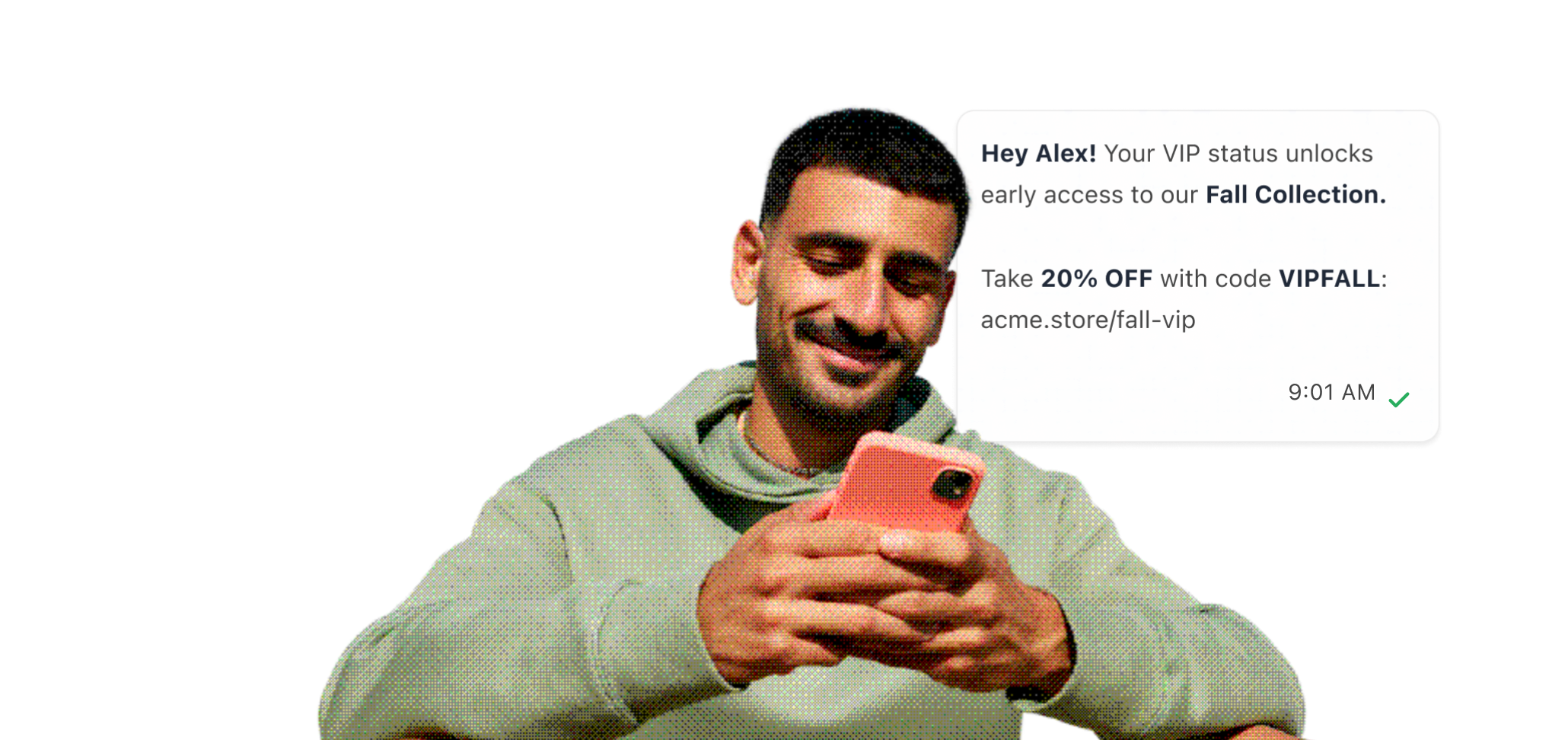
From campaign intent to measurable customer response
Your CRM, CDP, or campaign logic supplies the audience and goal. Sent applies contact permissions, the right channel template, delivery, and a clean event record.
Everything needed to launch with relevance and control.
Sent turns an audience and campaign idea into channel-native delivery without taking ownership away from your CRM, CDP, or analytics stack.
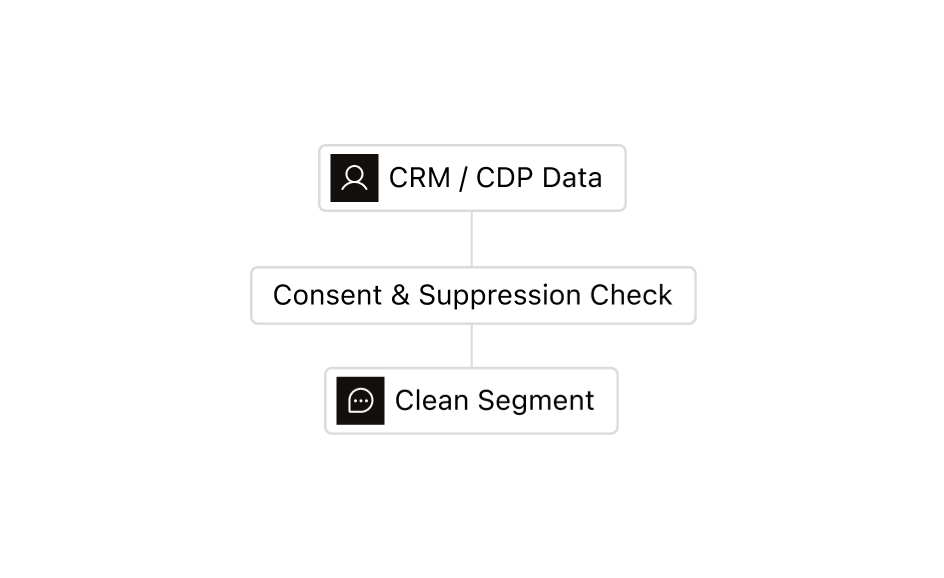
Prepare campaign-ready audiences
Receive segments created in your CRM, CDP, or product data and apply the correct consent and suppression checks before sending.
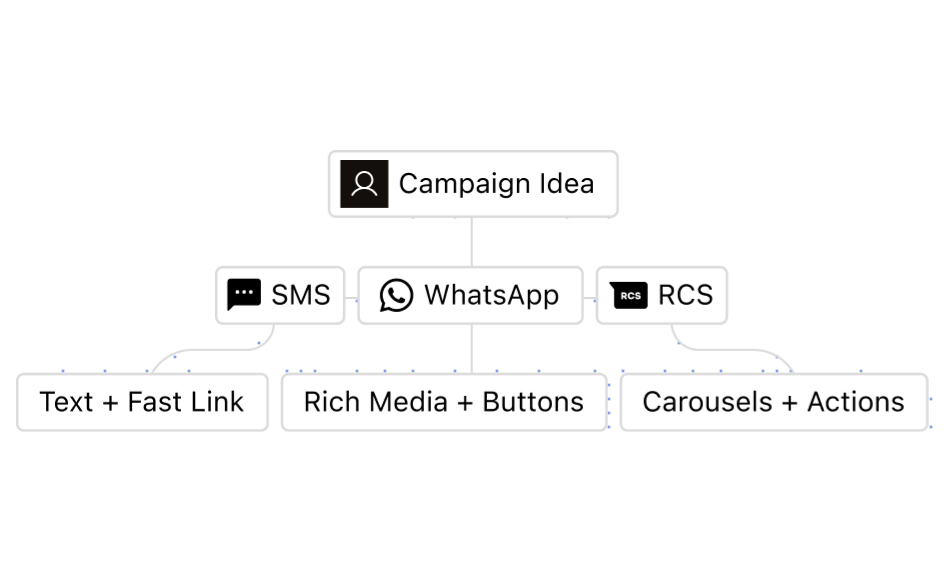
Create channel-native messages
Use reusable templates with channel-specific structure, media, and actions while keeping the campaign idea and brand consistent.
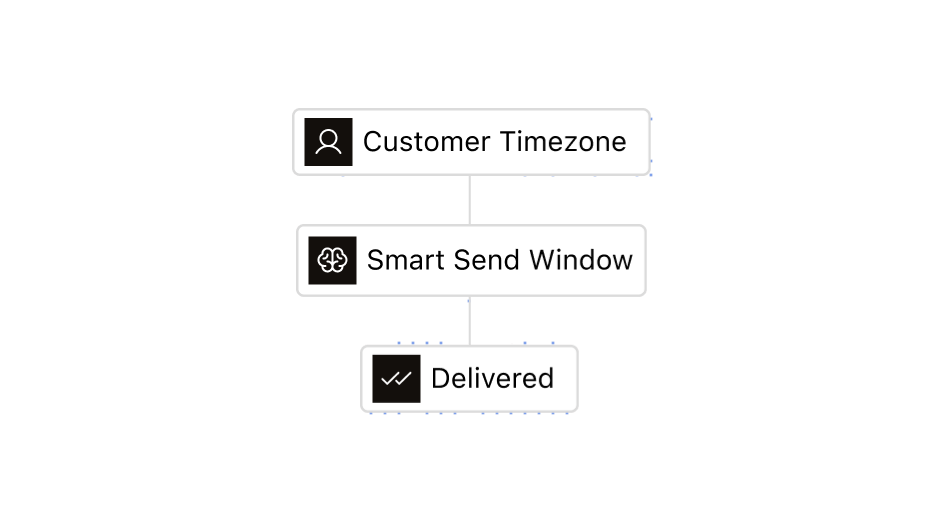
Schedule around customer context
Use timezone, lifecycle, and campaign logic in your systems to choose an appropriate send window instead of one global blast.
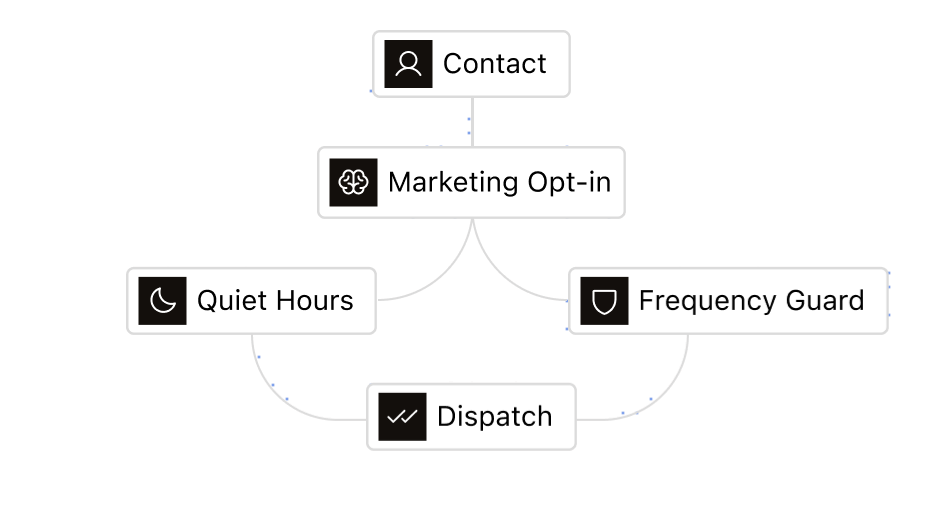
Control frequency and opt-outs
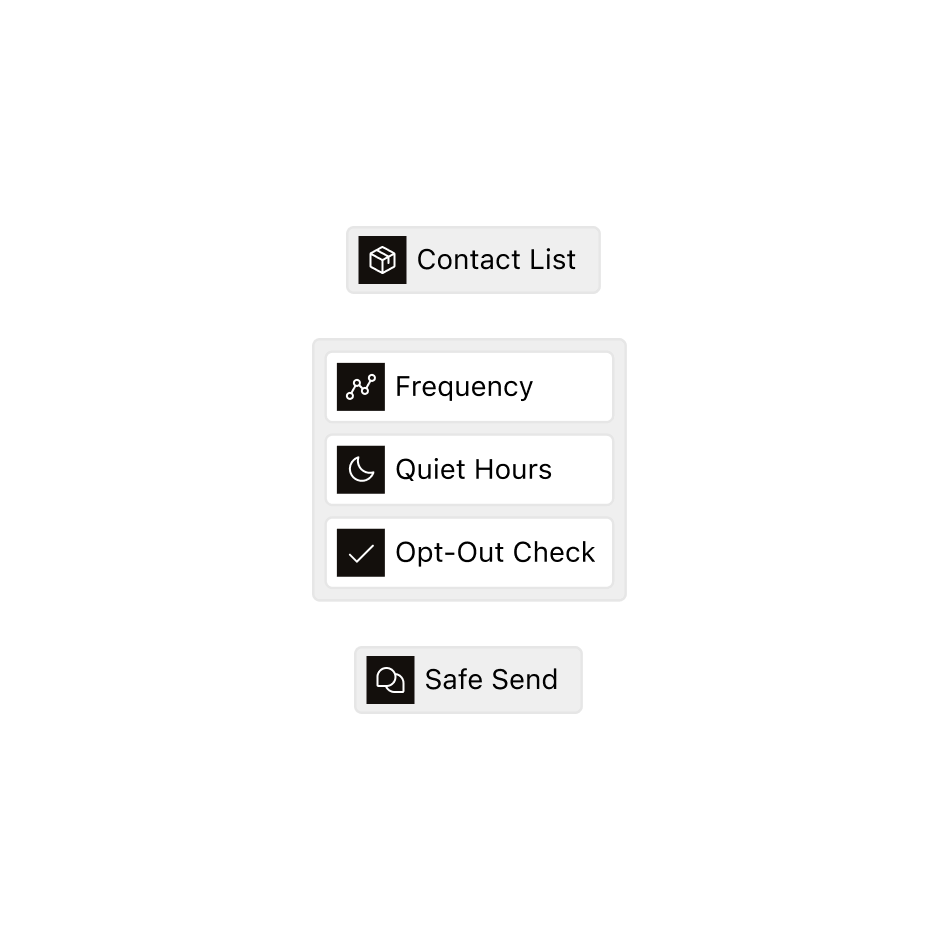
Check marketing permission, suppression, frequency, and quiet-hour rules before a contact enters the send.
Keep creative flexibility without rebuilding delivery for every channel.
Use one campaign system of record while adapting the customer experience and measurement to each messaging channel.
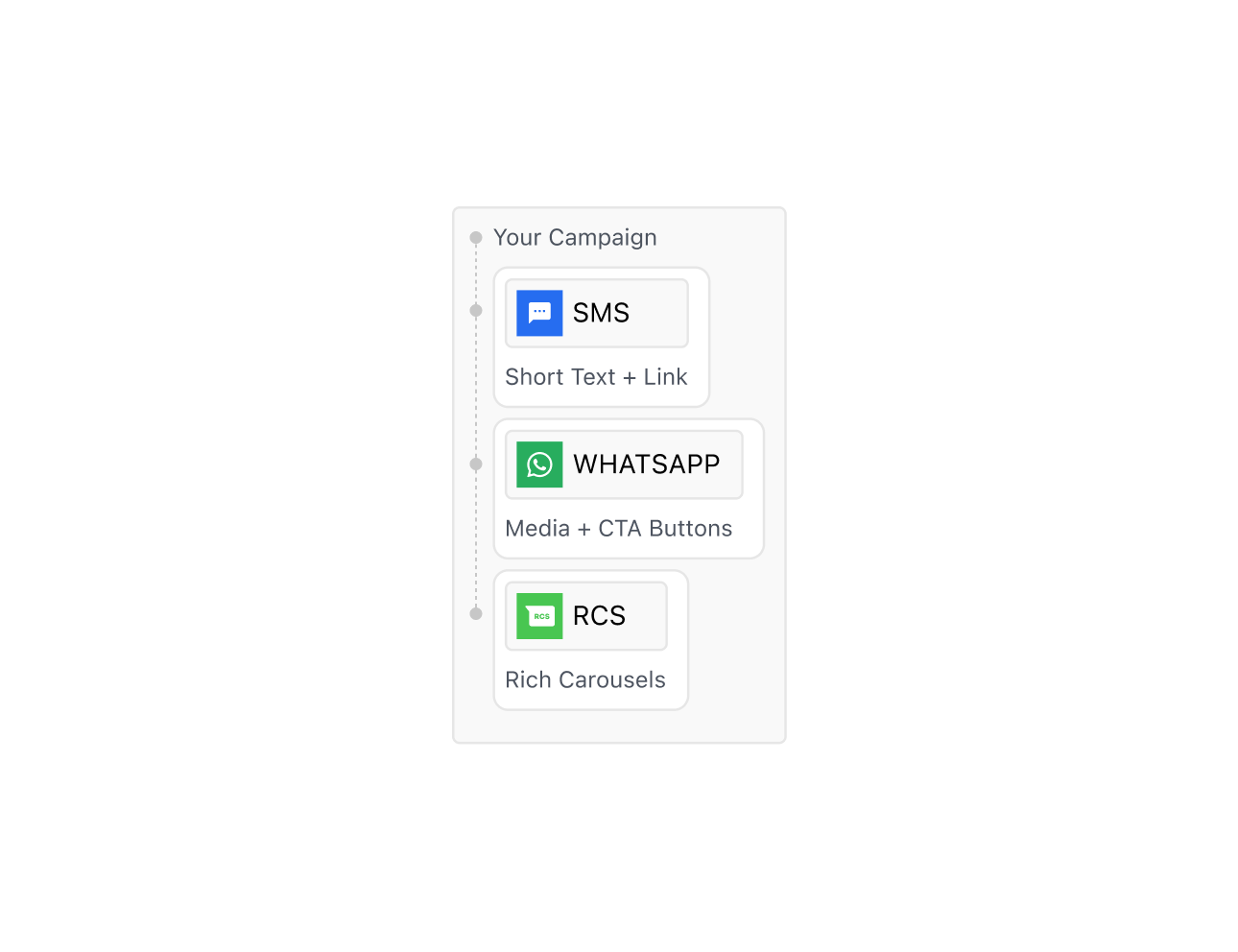
Grow reach without treating permission as a checkbox.
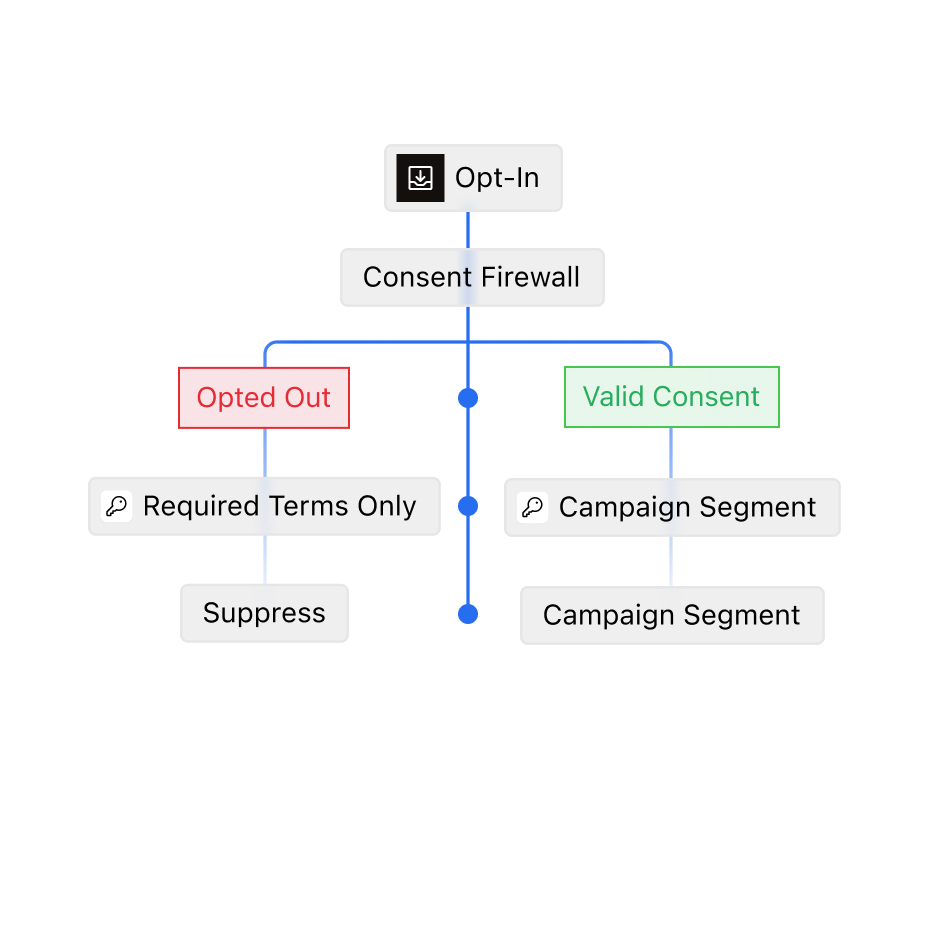
Collect clear marketing permission, keep it separate from required service terms, and exclude contacts whose consent does not cover the campaign.
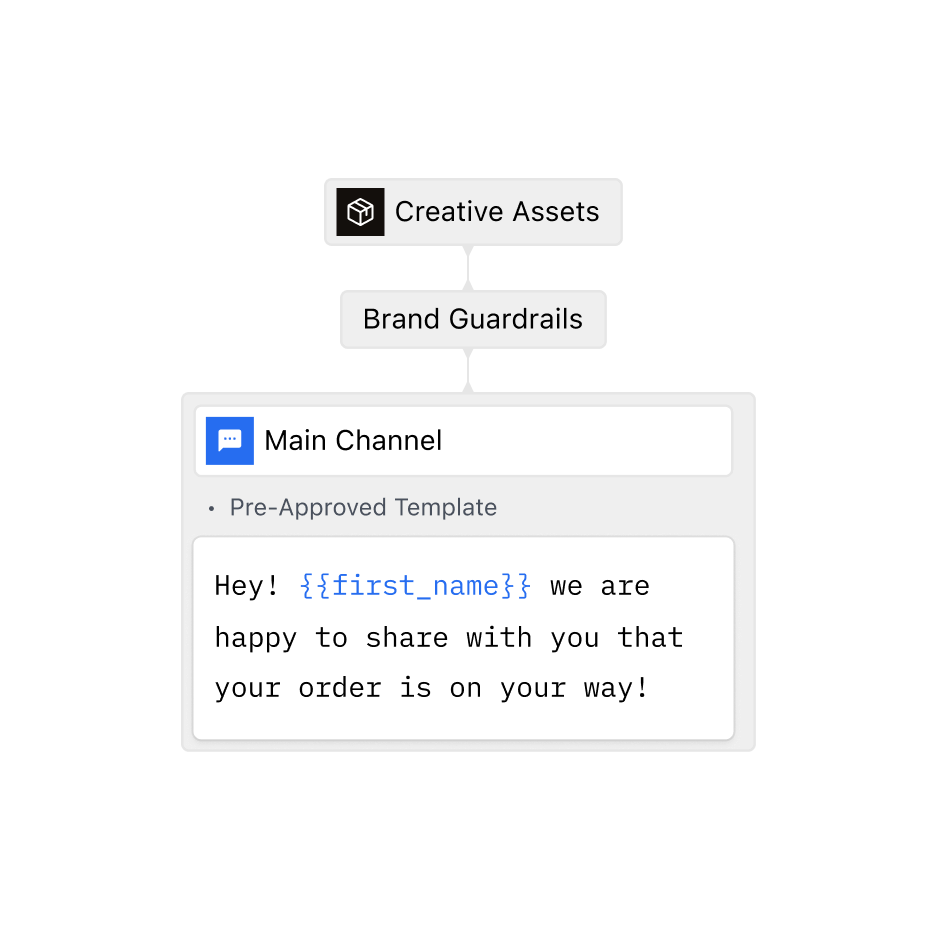
Keep creative assets behind brand guardrails and send from pre-approved channel templates, so every campaign leaves in the same voice.
Frequency caps, quiet hours, and opt-out checks run against the contact list before dispatch, so the rules are applied rather than assumed.
One API. Every channel.
Contact SalesFrequently asked questions
Your CRM, CDP, or campaign tool decides who receives a campaign and why. Sent handles delivery. It checks each contact's opt-out status, adapts the template to each channel, delivers over SMS, WhatsApp, or RCS, and returns delivery, read, reply, and click events. Sent isn't a campaign builder, so segments and analytics stay in the tools you already use.
Each Sent API request can include up to 1,000 recipients, with a standard limit of 10,000 requests per minute. You don't need to import contacts first, because Sent creates each contact automatically on the first send. Set a send time on the request to have Sent release the campaign at that moment.
It depends on where your customers are. US marketing texts need prior express written consent under the TCPA, Canada's CASL requires express consent, the UK requires opt-in consent, and the EU needs a lawful basis under GDPR. Collecting and recording consent is the sender's job. Sent then blocks every send to contacts who opted out or are on your suppression list.
WhatsApp campaigns use templates approved by Meta in the marketing category, because Meta requires an approved template for any conversation a business starts. Sent submits the template and tracks its review. Meta also rates template quality over time, and Sent reports every change. A template whose quality keeps falling is paused, so keep campaigns relevant.
Build one Sent template whose body text works as a plain SMS, then add a media header and buttons. WhatsApp shows the full layout, RCS turns the buttons into tappable chips, and SMS delivers the body only, so put the key link in the text. Rich cards and carousels aren't available on RCS through Sent yet.
Sent automatically holds messages that would land in a destination country's quiet hours and releases them when the window opens. Some rules are stricter. In the US, the TCPA limits marketing texts to 8 AM–9 PM in the recipient's local time, and some states go further. Where your legal review requires a tighter window, enforce it in your own scheduler.
Check delivery first. Failed, filtered, and blocked messages each come with a reason code, which points to a reach problem such as invalid numbers, opt-outs, or an unapproved template. If messages were delivered and read but drew few replies or clicks, the issue is the offer, the creative, or the audience.